Art Nouveau Seamless Patterns: A Practical Review for Digital Designers
In the landscape of digital design assets, few categories offer as much versatility and aesthetic longevity as vintage-inspired motifs. Among these, Art Nouveau Seamless Patterns have carved out a significant niche, appealing to a wide spectrum of creators ranging from freelance graphic designers to small business owners running Etsy shops. The specific offering in question—a high-resolution, AI-generated digital download—presents an interesting case study in modern asset creation. It bridges the gap between historical artistic movements and contemporary computational generation, providing users with ready-to-use textures that require minimal post-processing.
For professionals evaluating creative resources, the decision to purchase or utilize a digital pattern pack often hinges on three factors: resolution quality, seamless tiling integrity, and licensing flexibility. This review examines the practical application of these patterns, specifically focusing on the technical specifications provided (300 DPI, 3600 x 3600 pixels) and their suitability for various commercial and personal projects.
Understanding the Art Nouveau Aesthetic in Digital Assets
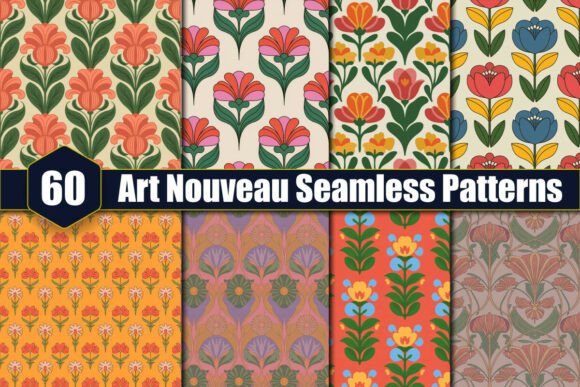
Art Nouveau, or "New Art," was an international style of art, architecture, and decorative arts that peaked in popularity between 1890 and 1910. Characterized by its use of long, sinuous, organic lines and floral motifs, the style sought to create a total work of art, integrating visual art into everyday life. When translated into digital seamless patterns, this aesthetic offers a sense of elegance, refinement, and timelessness that resonates strongly with modern audiences seeking alternatives to stark minimalism.
The key characteristics of Art Nouveau Seamless Patterns include:
- Organic Flow: Unlike geometric patterns, these designs rely on curvilinear forms that mimic nature, such as vines, leaves, flowers, and insect wings.
- Balanced Composition: Successful seamless patterns maintain visual weight across the tile, ensuring that when repeated, no harsh seams or awkward gaps are visible.
- Muted yet Rich Palettes: Historically, the style favored earth tones, golds, deep greens, and soft pastels, though modern interpretations may vary.
These attributes make the patterns particularly effective for brands aiming to convey heritage, craftsmanship, luxury, or romanticism. For bloggers, educators, and marketers, incorporating such visuals can elevate the perceived value of content, making it appear more curated and professional.
Technical Specifications and Quality Assessment
One of the primary concerns for any designer working with digital downloads is file quality. The specification of 300 DPI (dots per inch) at a resolution of 3600 x 3600 pixels is a robust standard for print production. To put this into perspective, a 12″ x 12″ image at 300 DPI contains over 12 million pixels, which is sufficient for high-quality printing on medium-sized formats without noticeable pixelation.
However, the claim that these are AI-generated designs introduces a layer of complexity. Artificial Intelligence has made tremendous strides in generating coherent imagery, but it occasionally struggles with fine details, symmetry, and logical continuity in complex patterns. In this context, the prompt notes that the "image quality is very good." For most practical applications, this is likely accurate. AI excels at creating intricate, lace-like details that would be tedious to draw manually. Yet, users should remain vigilant when scaling these images up significantly or zooming in closely on specific elements, as some subtle artifacts may emerge upon critical inspection.
The fact that the images are delivered in JPG format is a double-edged sword. JPG is universally compatible and results in smaller file sizes, which is advantageous for web usage and quick downloads. However, JPG is a lossy compression format. If the pattern involves sharp lines or solid blocks of color, JPEG artifacts (blocking) might appear. For organic, gradient-heavy Art Nouveau designs, however, JPG is generally acceptable. Users requiring maximum editability might prefer PNG or vector formats, but for the intended use cases described below, JPG provides a pragmatic balance of quality and convenience.
Practical Applications and Use Cases
The versatility of Art Nouveau Seamless Patterns allows them to be integrated into a diverse array of projects. Because they are provided as a digital download only, users retain the freedom to apply them according to their own workflow needs. Below are several high-value applications where these assets shine.
Print-on-Demand and Merchandise
Entrepreneurs and hobbyists selling physical goods will find these patterns highly valuable. The 12″ x 12″ size is ideal for:
- Wrapping Paper: The seamless nature ensures that rolls of paper look continuous and professional.
- Hang Tags and Labels: Small-scale applications benefit from the intricate detail of the design, adding a touch of luxury to product packaging.
- Stationery and Card Making: Invitations, thank-you cards, and letterheads can use these patterns as backgrounds or borders, instantly elevating the design from generic to bespoke.
Digital Content and Web Design
For bloggers, publishers, and website developers, visual hierarchy is crucial. Using Art Nouveau Seamless Patterns as background textures for headers, sidebars, or section dividers can break up large blocks of text and guide the reader’s eye. The 3600px width allows for full-bleed backgrounds on most desktop monitors without the need for horizontal stretching, which could distort the aspect ratio.
Furthermore, social media managers can use these patterns to create cohesive brand aesthetics. Instagram stories, Pinterest pins, and Facebook cover photos can all feature these designs to maintain a consistent visual identity across platforms.
Crafting and DIY Projects
Serious hobbyists engaged in decoupage, scrapbooking, or mixed-media art will appreciate the ease of use. Since the images are resizable, a crafter can scale a 12″ x 12″ pattern down to fit a greeting card or up to cover a larger canvas. The digital-only format means there is no shipping wait time; users can download, print, and cut immediately, streamlining the creative process.
Evaluating Strengths and Limitations
To provide a balanced view, it is essential to weigh the strengths against potential limitations. Understanding these factors helps determine if Art Nouveau Seamless Patterns fit your specific project requirements.
Strengths
- Cost-Effectiveness: Compared to commissioning a custom illustrator, purchasing a pre-made digital pack is significantly cheaper and faster. It allows for rapid prototyping of designs.
- Immediate Usability: The high resolution and standard dimensions mean the files are "ready to go." There is no need to search for separate clipart or spend hours aligning tiles.
- Aesthetic Appeal: The Art Nouveau style is inherently pleasing and widely accepted in design circles. It adds sophistication without being overly trendy, ensuring the designs remain relevant for longer periods.
Potential Limitations
- Lack of Vector Editability: As JPG files, the patterns are raster-based. You cannot easily isolate individual vines or flowers to recolor them individually without using complex masking techniques in software like Photoshop. If you need to change the color scheme extensively, you may face more effort than with vector assets.
- AI Artifacts: While the overall quality is noted as good, close examination might reveal slight irregularities in the repetition or unnatural blending of elements. For high-end editorial work, this might require additional retouching.
- Copyright Nuances: While the prompt suggests broad usage rights, it is always prudent for users to verify the specific license terms. Some AI-generated content has ambiguous copyright status depending on jurisdiction. Ensure your intended use (especially commercial resale) complies with the provider’s policy.
Who Should Consider This Resource?
The target audience for Art Nouveau Seamless Patterns is broad, but certain groups will derive the most value:
- Small Business Owners: Those creating branded materials like business cards, flyers, or packaging on a budget will find these assets efficient and effective.
- Freelance Graphic Designers: Designers looking to add variety to their portfolio or quickly mock up concepts for clients can use these patterns as foundational elements.
- Educators and Content Creators: Teachers preparing handouts, worksheets, or classroom decorations can enhance their materials with visually engaging backgrounds.
- Hobbyist Crafters: Individuals who enjoy scrapbooking, card making, or home decor projects will appreciate the instant access and high print quality.
Conversely, professional illustrators or designers seeking unique, one-of-a-kind artwork for major campaigns might find these patterns too generic. Similarly, those requiring precise control over every vector node may prefer investing in editable SVG or EPS files rather than raster images.
Final Recommendations for Implementation
If you decide to incorporate Art Nouveau Seamless Patterns into your workflow, consider the following best practices to maximize their potential:
Test Before Scaling: Always print a small test section before committing to a large print run. Check for seam visibility and color accuracy on your specific printer.
Layering Techniques: To avoid flatness, try overlaying the pattern with semi-transparent shapes, text boxes, or gradients. This adds depth and integrates the pattern more naturally into the composition.
Color Adjustment: Even though the files are JPG, you can adjust the hue, saturation, and brightness in most editing software to better match your brand palette. This can help differentiate your use of the pattern from others who may have used the same asset.
In conclusion, Art Nouveau Seamless Patterns represent a practical, high-quality resource for a wide range of creative endeavors. Their combination of historical aesthetic appeal, technical readiness, and versatile application makes them a worthwhile addition to any designer’s toolkit. While they lack the editability of vector graphics, their convenience and visual impact make them an excellent choice for projects where speed, cost, and elegance are prioritized. Whether you are crafting a wedding invitation suite, designing a website header, or producing custom wrapping paper, these patterns offer a reliable foundation for professional-looking results.